Design Fundamentals: Craft
Let's start with what everyone in the industry believes, because it is mostly sincere: craft is what separates the real designer from the decorator. Care, patience, the trained hand, the educated eye, the respect for tradition—including traditions of resistance—are the fabric of design as a product, both as it is experienced by its practitioners and by its consumers. Ask one of us where the industry came from and you get a lineage: the scribes, the punchcutters, the private presses, the pioneers of modernism, the early adopters of the Mac. Ask a company where it came from and you get the same story in corporate form. Monotype's own history reads as a procession of ingenious machines and storied names, rendered in the tone of inheritance, as though a library assembled by purchase were a family estate. The story has a moral, and the moral is diligence. The industry owns what it owns because generations of skilled, devoted people built it.
The economist Adam Smith gave this story its canonical form two and a half centuries ago. Before the division of labour could begin, he wrote, some people must have saved: the accumulation of stock had to be, in his word, previous. The industrious gathered; the rest did not; and that is why some own and others work. Marx's answer, a century later, was that the so-called primitive accumulation had nothing thrifty about it. The record was enclosure, colonisation, law, and force, the producer separated from the means of production by process rather than by virtue. The sneer in "so-called" is aimed straight at Smith's "previous."
The design industry's record reads like Marx's version. The trade knowledge of letterforms, built collectively over centuries of scribal and workshop practice, was enclosed by the foundries. The linecasting machines of the late nineteenth century turned typesetting into a capital-intensive industry, answerable to the machine's owner. Phototype lowered the capital barrier but kept the designs themselves as assets. Then desktop publishing arrived, and the typesetting unions, among the strongest craft unions in the United States, fought cold type and computerisation through the 1970s and 1980s and lost everything; the International Typographical Union, a hundred and twenty thousand members at its peak, merged into the Communications Workers of America in 1987 and ceased to exist. They fought, instructively, for control of the tool. Never for ownership of the asset. The distinction will matter.
The first craft ideology grew up alongside the first enclosure. William Morris and the Arts and Crafts movement built the modern idea of craft as a critique of industrial deskilling: the alienated factory hand against the fulfilled artisan. It resolved, famously, into luxury goods. Morris's firm could only furnish the wealthy, and he knew it, and the knowledge sits in his writing like a stone. Every revival since has followed the same arc: letterpress, hand lettering, artisanal type, slow design. Each begins as resistance to a deskilling and ends as a price tier. Resistance functions as research and development for the next enclosure.
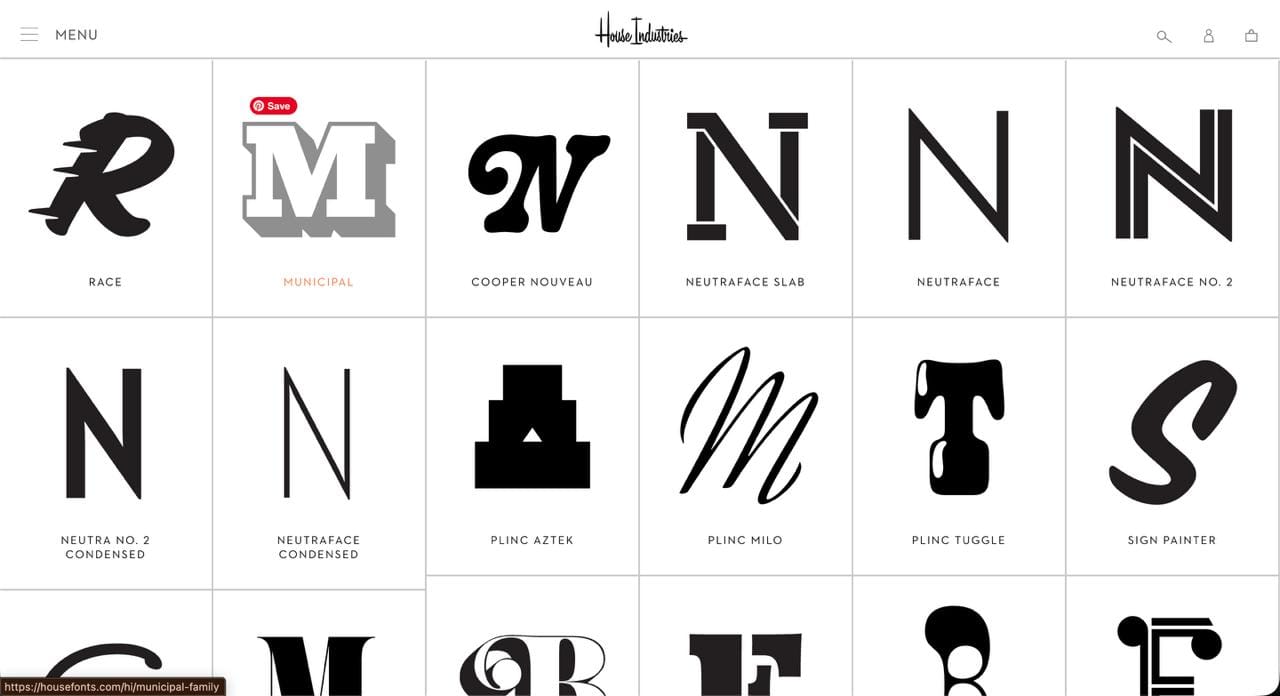
Something else accumulated in the same long period, and it was not capital. A handful of countries (Italy, England, Germany, and Switzerland among them) became "the tradition." This needs saying carefully. The claim is not that European type history was a colonial project; Bodoni was not an instrument of empire. The universalisation of that tradition however, ran through colonial and missionary infrastructure.
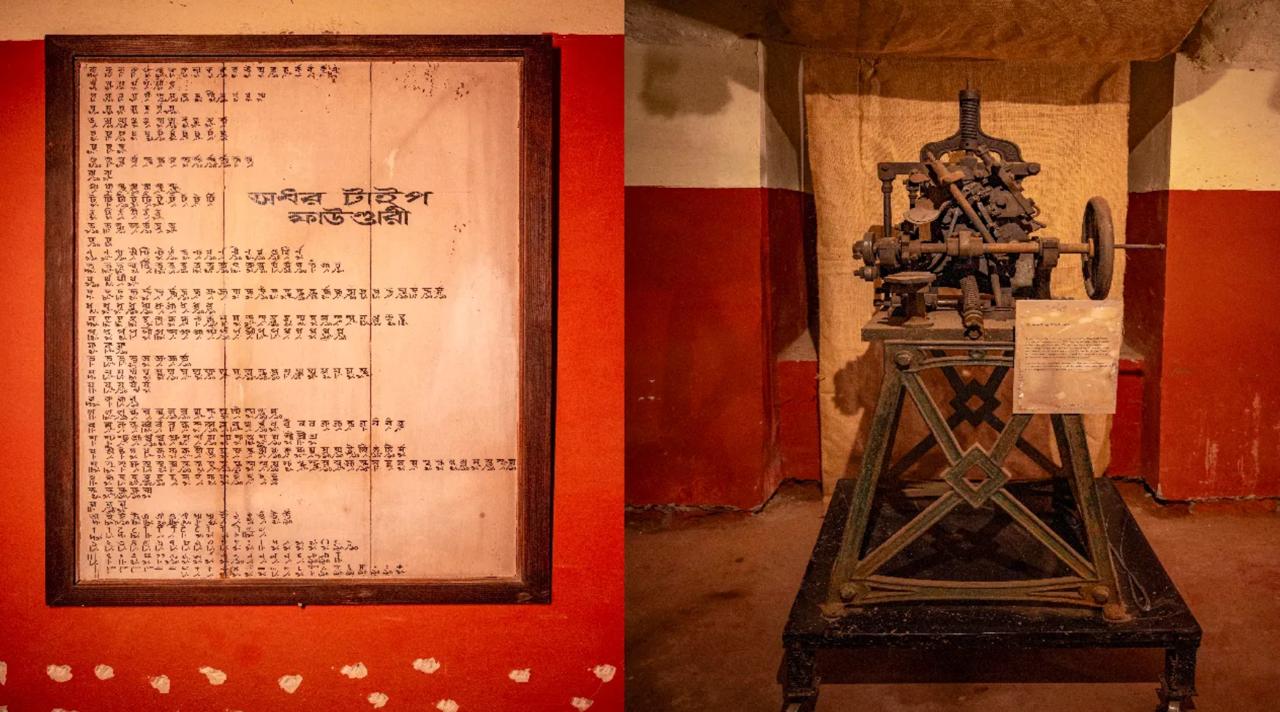
As an example: the Serampore mission press cutting type for Bengali and a dozen other languages from 1800, and the punches struck by Indian craftsmen, Panchanan Karmakar and his son-in-law Manohar, inside an infrastructure that belonged to someone else's church. Colonised visual cultures were catalogued and absorbed as inspiration and future IP, while their makers received no position in the resulting canon. Design happened everywhere. It always had. What accumulated in a few places was the authority to say what counts as good. The canon is best read as a record of where that authority was allowed to settle, afterward narrated as though it had originated there. A parallel primitive accumulation, of legitimacy rather than capital. It costs less to make a Devanagari font in India than it does to make a Latin font in New York, despite the chasm in difficulty between them.
In design, the product of labour is infrastructure. A typeface is a commodity and an instrument of future production at once, and it does not depreciate. It reproduces at near-zero marginal cost and collects for decades: dead labour drawing rent from the living. The industry's actual means of production are the library of accumulated work and the distribution network that mediates access to it—the tollbooth; both are consolidating still, as foundries are absorbed into platforms and independent catalogues into subscription bundles. The enclosure moments are specific, and they repeat: the original separation of designer from product, ratified in law; the United States' refusal, sustained to this day, to protect type designs as such, which left the design expropriable by whoever owned the manufacturing; the Vienna agreement of 1973, meant to protect typefaces internationally, signed by ten states, ratified by two, and never in force; the deskilling rounds that stripped the compositors of their craft; and, cleanest of all, the present harvesting of the design corpus to train generative models, taken without consent, compensation, or even a purchase order. That last one is the closest thing to a classical enclosure the industry has produced in decades.
David Harvey's term for the ongoing version is accumulation by dispossession. Enclosure is the industry's recurring weather, not its origin story. Each new tool cycle, phototype, PostScript, webfonts, subscription software, generative models, raises productivity and simultaneously redefines who owns the product of past labour. Dispossession arrives wearing the press release of progress.
Craft narrative is what makes this livable. In a productive creative economy, that is its function. It tells you that the means of production are already yours: the hand, the eye, the taste, all carried in the body. If the means of production are inside you, there is nothing to seize and nothing to organise, and the question of who owns the library and the tollbooth never quite forms. The wage buys the hours and the mechanics. What the product carries away is the crystallised judgment, the part that does not stop earning when the invoice clears, and it accrues to whoever holds the asset. Marx's early manuscripts named the underlying condition: the worker estranged from the product and the process, watching what he makes confront him as something alien. Craft narrative is that estrangement with good manners. It re-narrates alienation as vocation, and care, real, felt, honourable care, becomes the extraction mechanism: surplus labour handed over freely because it reads as devotion.
The canon operates as the same mechanism one level up. "Good" is a verdict, and the court sits in the western imagination. The standard is property: schools teach it, awards grade against it, platforms price by it, and everyone else auditions. Type education still runs Latin as the default and every other script as the specialisation; designers working in Arabic, Devanagari, or Bengali train at western institutions to become legible to the industry, on software built around someone else's alphabet. Google's Noto arrives as the emblem of the arrangement: access and standardisation delivered together, under one platform, and on that platform's terms.
The contradictions deserve plain statement. The independent foundry, the industry's image of resistance, is touted as a small landlord. "Passive income from my typeface" is, for more designers every day, a fable internalised. Emblematic figures make it seem attainable. Indeed, it's doublethink in an era when more and more designers are pressured by industry standards into either absorption into one of the leading subscription models, or reliance on "simplified" licensing to provide an edge. Neither is a guarantee of longevity.
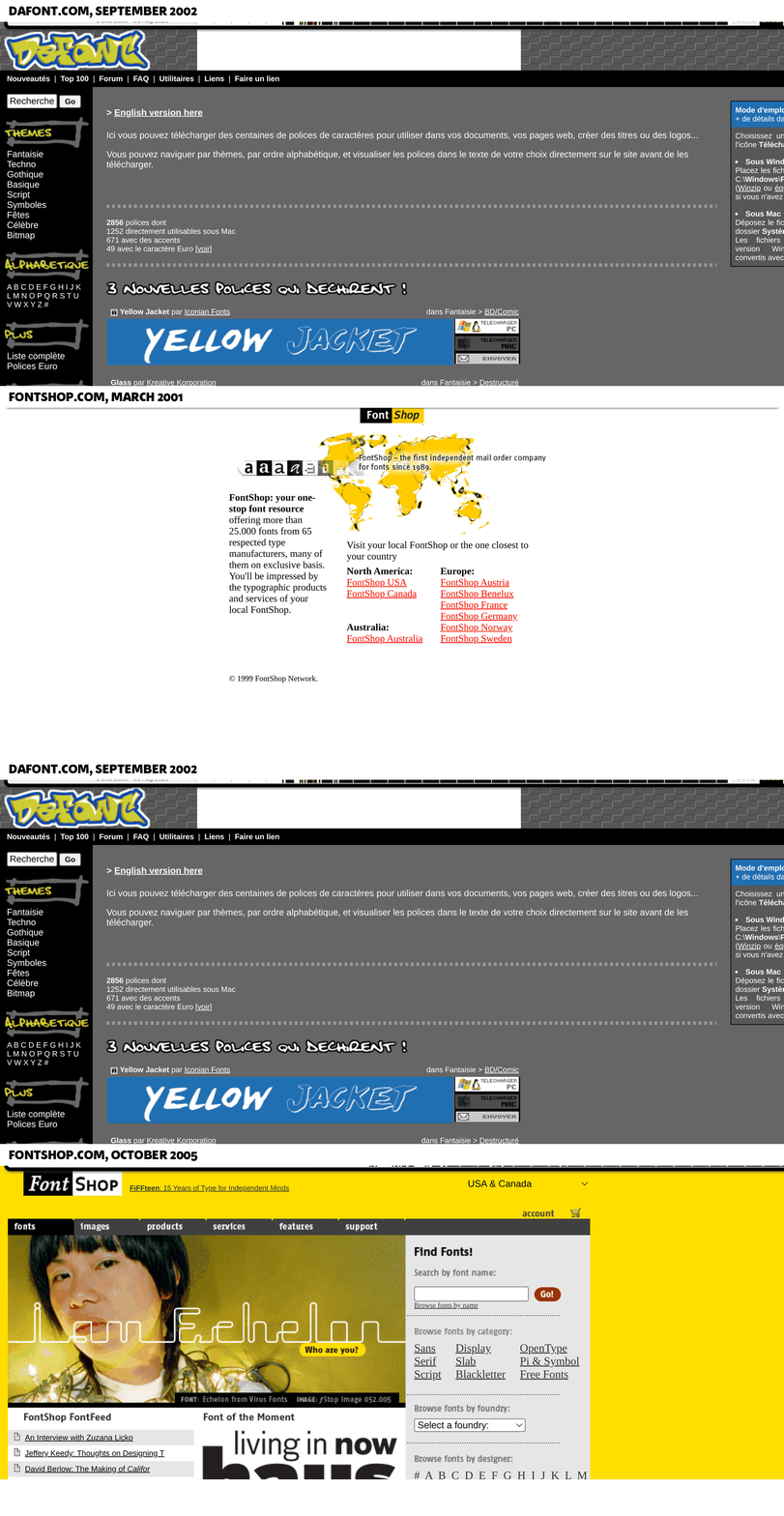
The pirate libraries had proven the demand: frictionless access to vast searchable catalogues, and MyFonts and its imitators built exactly that, legally, with instant downloads, cheap licences, and identification tools. Resistance did the market research; capital collected the returns. Libre type, the one serious attempt at commons-building, was answered by Google Fonts, and the commons came back as infrastructure. The open font movement had built work under terms that prevented re-enclosure, free to use, modify, and share forever. Google aggregated the libre catalogue, commissioned more of it, and served it all free with one-line embedding. The commons survived as content and changed meaning, from a withdrawal from the market into a subsidy for a platform, and independent foundries now compete against zero.
New anti-AI discourse defends the skill boundary with real passion while the warehouse is emptied from below. And the standard reproduces through the people it excludes; designers outside the canon internalise it, police one another with it, and confirm the universality that excludes them. The border guards itself.
One more contradiction, and it stays unresolved: Craft is genuinely among the last dignities the job offers. The pleasure of the well-made thing is real, the bargaining power of mastery is real, and a critique of craft mythology can read, not unreasonably, as an attack on the only part of the work that still belongs to the worker. Morris lived inside this bind and never escaped it, and neither does this essay. Craft, ideology and all, is also what keeps the work grounded. The narrative built around the pleasure is ideological anyway. Both facts persist.
Important questions: why does our industry need inheritance stories, and why do those stories need a western lens? The story and its lens together convert accumulation into inheritance, and inheritance is the one form of ownership nobody is asked to justify. More questions: Who truly owns the captured assets of dead labour, if those assets are more than outlines? Who wrote the craft rubric the rest of the world is marked against? What do your contracts actually do, the work-for-hire clauses and full buyouts, the price-fixing agreements…and where do the rights end up? These are questions, not provocations; what you sign is your business. For now, anyway.
The fable is structural. Remove the story of diligent pioneers and inherited tradition, and the current distribution of ownership has to stand on its record, which it cannot. Craft remains what it has been since Morris: the last dignity of the work and the mechanism of its estrangement, both in the same gesture. If you are just entering the trade, I have no program to offer you, because there isn't one. Only a location. See clearly where all of this lands you: which side of the library—and which side of the tollbooth.